If only the poster of the image had had the same consideration. I had half a mind to flag it – and “off topic” would stick because it isn’t an arachnid. I sure don’t appreciate coming here to discuss arachnids and then, with no warning, suddenly being shown decapitated animals!
2 Likes
Maybe these can help…?
One of my favorite moments when photographing jumping spiders (another sentence I never would have thought I’d write!), is when they pause, turn and gaze right at you with their adorable, liquid eyes…
Attulus fasciger (Asiatic Wall Jumping Spider)
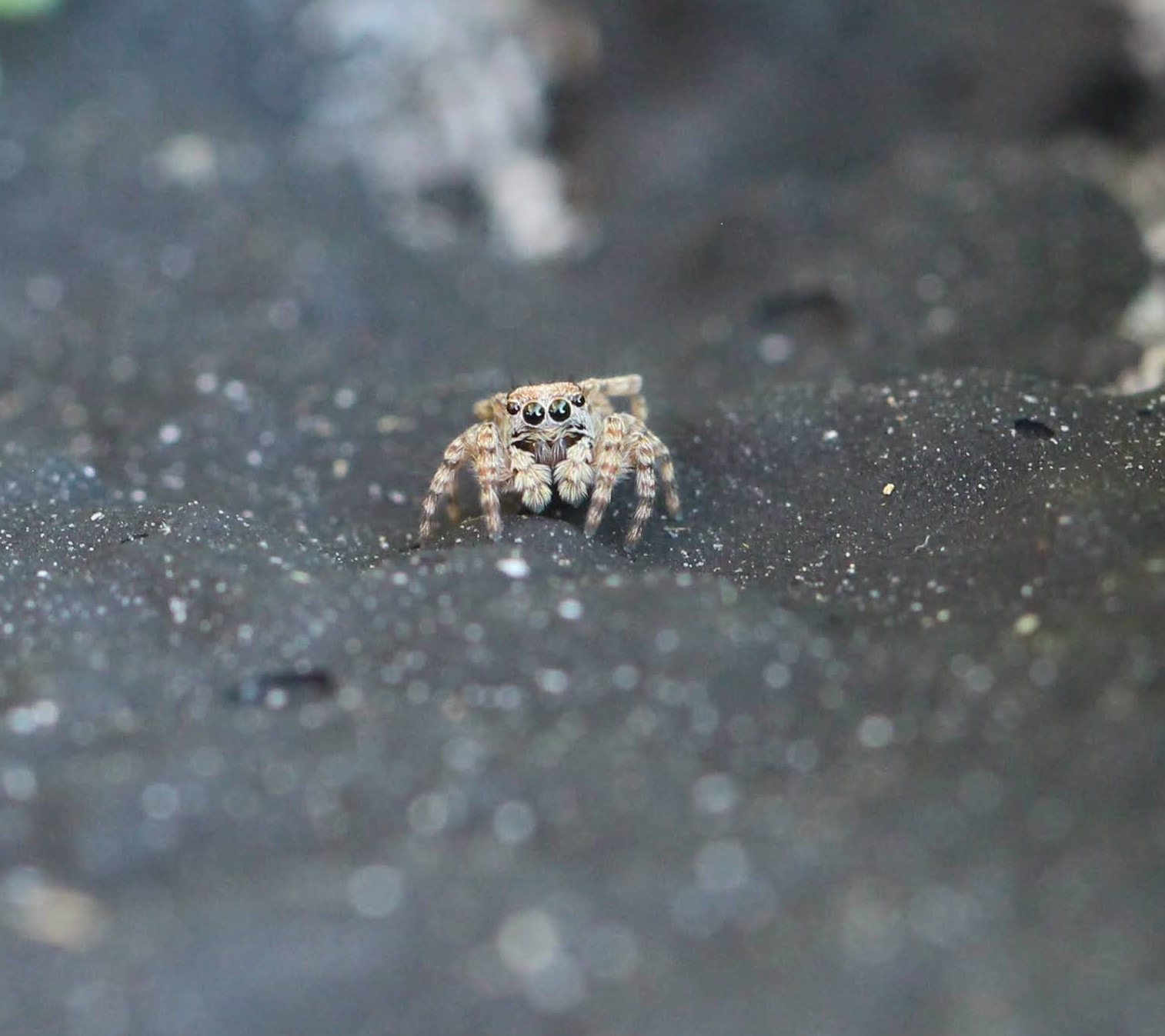
…especially when it’s a new species for me…
Synemosyna formica (Slender Ant-mimic Jumping Spider)
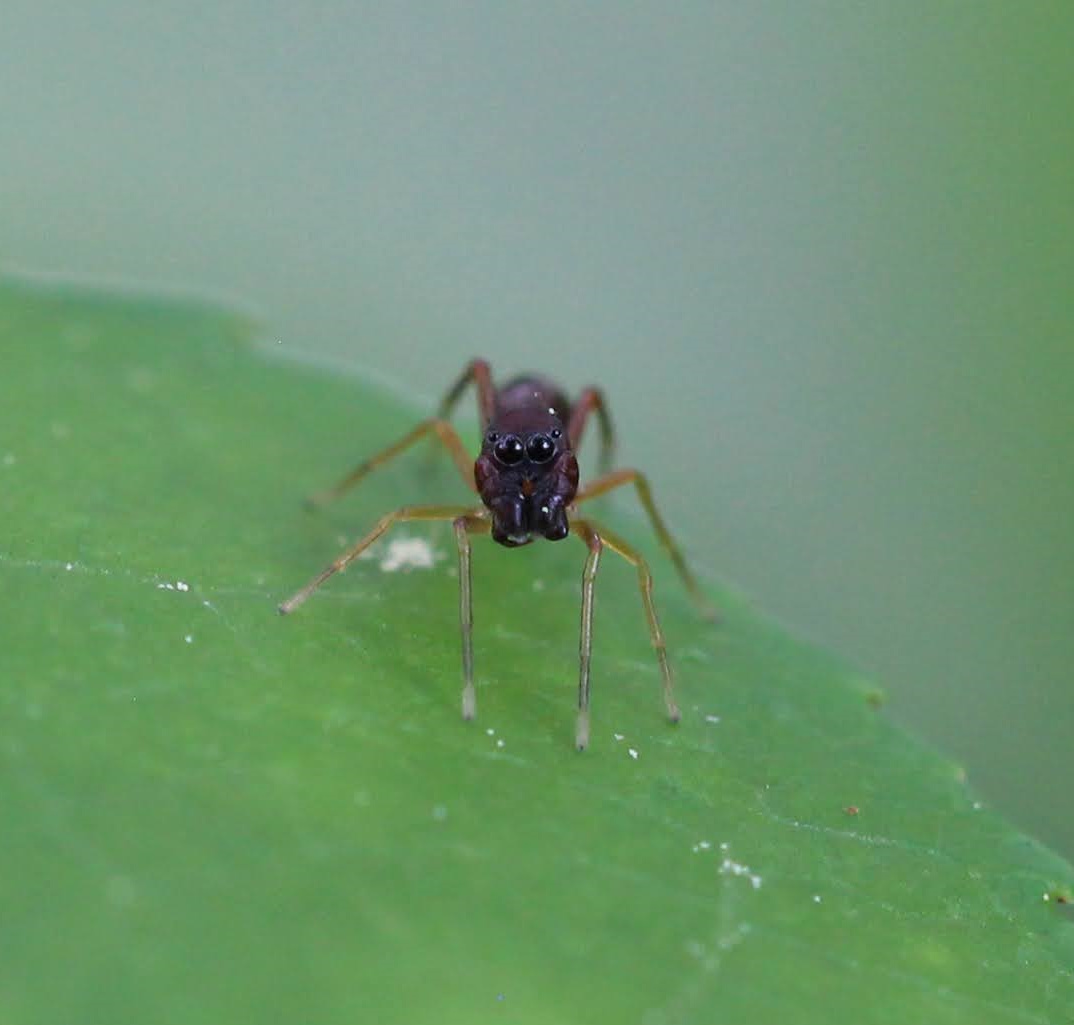
…or just a less frequently seen one…
Hentzia mitrata (White-jawed Jumping Spider)
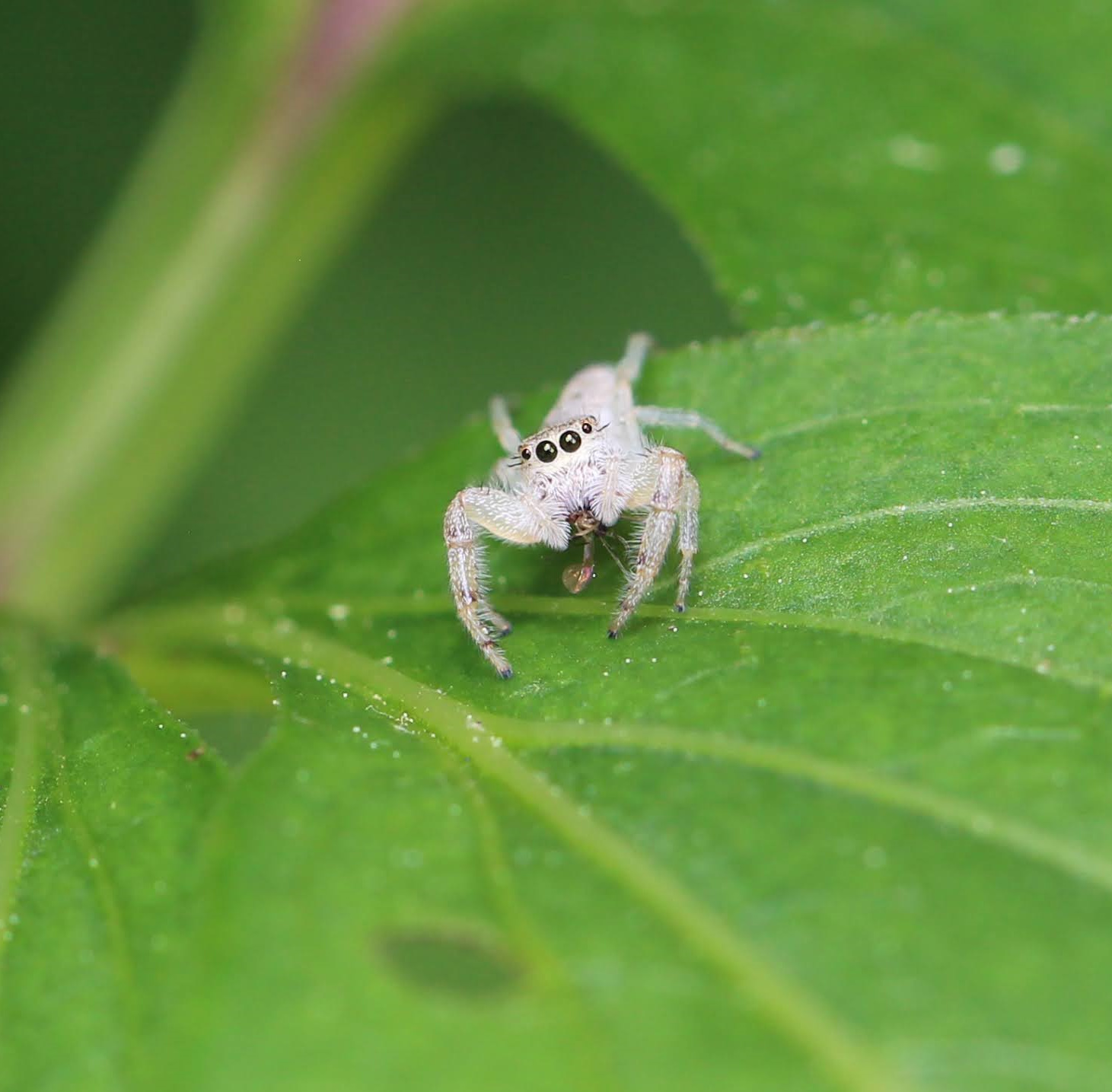

6 Likes
Or when they give you the fist-bump of approval (aka taping your finger lightly)!
3 Likes
I found this pretty little orb weaver taking advantage of my moth lights in Costa Rica. Small but very colorful. I do not know the species.

7 Likes
Not my observation, but I had no idea spiders could be bilateral gynandromorphs, let alone a species as strongly dimorphic as Misumena vatia:
https://www.inaturalist.org/observations/293778918
8 Likes
That’s crazy! Bilateral gynandromorphs are so strange looking.
awesomeeeeeeeee
thanks for sharing here!
One thing I have always wondered about bilateral gynandromorphs: can they “feel” that they are gynandromorphs?
I use the word "feel’ in the broadest possible sense: if you figure that sex hormones in turn affect dimorphic behaviors, that means that the organism “feels like doing” different things depending on its sex. Males “feel like” doine male things, females “feel like” doing female things. We aren’t supposed to use the word gender when referring to nonhuman animals, but it seems a lot like gender to me; people’s gender identity is something they feel, but the gendered things they do also stem from what they “feel like doing.”
We humans don’t have bilateral gynandromorphs, but if we did, some of them could probably articulate what it “feels like” to be one, just as intersex and transgender people can.
http://www.inaturalist.org/observations/298580421
Found this Tarantula while UVing for scorpions tonight.
2 Likes