Beginner-friendly camera for bird photography

tldr

I’m looking for a second camera, for bird/long-distance photography. Budget €800-1000 (flexible). I currently use an Olympus TG7 for macro but I’m a total beginner for anything else. I want something simple, with good zoom and autofocus. I tried a Canon 4000D with a telephoto lens and liked it. What would you recommend?


Hi everyone :waving_hand:

I’m a naturalist and science educator, but not a photographer at all, though in a way i have to be one to document my observations on iNaturalist, where clear photos are often very useful for species identification and reporting.

I’m looking for advice to buy a second camera to complement my Olympus TG7, which works perfectly for macro (insects, plants, lichens…), but it’s not well suited for recording distant subjects, especially birds.

I want to be able to photograph birds and other distant wildlife, so I’m looking for a camera with:

  • a strong zoom or the possibility to use a telephoto lens,
  • reliable autofocus,
  • the ability to capture moving subjects,
  • a comfortable grip for outdoor use (hiking etc)
  • and not too many complicated settings, since I’m a complete beginner (though I’m willing to learn).

My goal is not artistic imagery, but clear enough record shots to support species identification and documentation.

I’ve tried a Canon EOS 4000D with a telephoto lens and found it simple and effective. So I’m looking for something similar, or slightly better if my budget allows

I’ve seen recommendations for cameras like the Canon PowerShot SX70 and the Nikon Coolpix P950/P1000, but I’m not sure if it’s better to get a bridge camera or a reflex with a telephoto lens ?

I’m not familiar with typical prices for this kind of equipment
My budget is around €800–1000 for the camera and possibly a telephoto lens
I can stretch it a bit if necessary, or spend less if there’s a good option.

Given my needs and budget:

  • What kind and model of camera / lens would you recommend for a beginner documenting birds and other distant subjects ?

  • What focal length / zoom range is generally needed to record distant birds or wildlife?

  • What key features should I look for to handle distant subjects and subjects in motion, and what should I avoid ?

I’m a complete beginner, so any clear, simple explanations are very welcome!

I’m also interested if anyone can share resources (posts, articles, videos) that would help answer my questions.

Thanks in advance for your help :blush:

2 Likes

me personally I would also recommend coolpix 950 as you can switch between macro or long zoom whenever you feel like it

my own camera is P900 but thats discontinued

I suppose you have budget for better options but this camera is one of the good ones in my opinion :)

also an advantage of coolpix is you can put it on birdwatching mode and just point and shoot by the time you learn manual mode and all :)

1 Like

Hi, thanks a lot for your answer! I had a look at your observations and your bird photos are great and the kind of results I’d like to get.

It would be nice if the camera could do both macro and long-distance, and I’ll keep that in mind, but that’s not my main requirement as my TG7 already covers the macro side and is very handy and lightweight, I mainly need a good complementary camera specialized for distant subjects.

I’ll definitely consider the Coolpix recommendation, the idea of a point-and-shoot “birdwatching” mode while I learn manual settings sounds really useful

Thanks again!

1 Like

Bridge cameras are extremely easy to use, have great zoom, but this does come at the cost of a bit of image quality (since they have much smaller sensors). Interchangable lens cameras normally would give advantages in image quality, better autofocus, etc (if paired with a good lens). Personally, for starting out I would go with the Nikon Coolpix series, because a dedicated setup would come at quite a learning curve. And as for macro, you could always pair one with a Raynox macro filter, but the TG-7 would probably give you better results there. Check out Kyron Basu’s amazing images (most of them taken by the TG-7) here: https://www.inaturalist.org/people/kyronb

2 Likes

What I personally use:
Nikon D5500 + AF-P DX 70-300mm f/4.5-6.3G ED VR
A very lightweight and compact setup (camera 420g, lens 415g). The lens focuses very quickly and allows you to catch birds in flight. You can buy the camera and lens used for $500. If the 300mm isn’t enough, then you should get a 150-600mm Tamron or Sigma, but they start at $600 used and weigh around 2kg.

All my bird photos taken in 2025 were taken with D5500 + AF-P DX 70-300: my birds

Also, if you add a Raynox 150 or 250, you can get excellent macro shots, better than with the TG-6. Most of my macro shots in 2025 were taken with the 70-300 and Raynox: my macro

1 Like

Two previous threads about birding cameras:
https://forum.inaturalist.org/t/camera-for-birds/65386

https://forum.inaturalist.org/t/what-camera-lenses-should-i-get-for-taking-pictures-of-birds-from-long-distance/70380

2 Likes

hi, thanks a lot for your answer (and springtail identifications ! :wink: )
I’ll definitely look more into the Coolpix options. I’m not sure if there’s a way to try cameras in real life before buying, if there is, that would really help me decide!

And Kyron’s shots really cool! I still need to improve my technique with the tg7, tend to take pictures “in a rush” and don’t spend much time adjusting settings or framing, haha

1 Like

Hi, thanks a lot for sharing! I really appreciate the links, being able to look at your photos helps a lot to understand what I can realistically expect. Your bird pictures are amazing, I honestly wouldn’t need anything better than that.

It’s hard for me to judge how much comfort I’m willing to trade for better image quality, since I’ve never actually hiked with larger lenses like the ones you mentioned. So that’s something I still need to figure out.

Also, I’m not very experienced with buying used gear, so I’m a bit cautious about it. I’m on a budget and I don’t really need brand-new equipment, but I’m not sure how to make sure I’m getting something in good condition.

Thank you! I hadn’t come across these two discussions yet, I’ll have a look at them!

I’d recommend the Coolpix p950, too. I use a different setup but have been on trips with someone using the p900 and was impressed by its versatility and the quality of its zoom photos. The price seems to be right in your range.

1 Like

Thanks a lot for your feedback!

Hi, @tritonalpestre, and welcome!

Nikon Coolpix user here. Mine is an older model, the P520, but I get fantastic results with it. It has a 42x optical zoom, with a wide-angle lens; equivalent 4.3-180mm. The autofocus is fast, it shoots in burst mode, takes video, and it has presets as well as manual controls. It feels solid without weighing a ton, has a well-designed grip, and it’s pretty sturdy. (I am not always as dainty with my gear as I ought to be; after a year of suffering my handling, it’s still going strong.) If I have any criticism of it, it’s that it isn’t always as good in low light as I’d like for it to be, and I always know when my battery is getting low, because the autofocus starts misbehaving. It has darned good battery life, though.

I saw that you mentioned the P950 and P1000; I can’t tell you anything about them other than that I’ve heard some grumbling that the lens makes the camera awfully front-heavy at full extension, and this can affect your ability to stay on subject. I’ll let the people who are familiar with those models delve into the pros and cons. I will say, though; having used both SLRs and digital bridge cameras, I am not missing the weight of the extra lenses! :smiley:

(Also, my Forum profile has a link to my iNat profile page, so you can take a look at some of the photos I’ve gotten with the Nikon. The header image for my forum profile is a Pale Snaketail that landed right in front of me on a hike. I had been photographing wildflowers, so there was no time to reset anything—just zoom, point, and pray!)

1 Like

Another vote for the Nikon P950 for birding. Also, with a very pocketable Raynox clip-on macro lens on it you can get right down to the 4mm field mag.

Also, the one big thing that the P950 has that its predecessor, the P900 lacks, is RAW shooting. Couple that feature with (what I consider a must-purchase) DxO’s PureRaw batch post processor and you can gain great detail, but more importantly noise reduction which instantly gives new life to any camera’s higher ISO range.

Some P950 samples. (First shot with the Raynox clipped in). As for travel, I think that it’s the most versatile single camera/lens* choice out there.

But hang onto the TG7! Gotta have the ‘you-never-know’ option with you as much as you can, if you’re a bug lover!

*Assuming you don’t count the Raynox clip-on in your back pocket.

3 Likes

You can rent cameras, but of course that costs a bit! As for macro photos, a built in flash with a diffuser would help. And also, to make the most of the image quality, one can use a method called focus stacking. Basically, you just slowly move forward/backward while taking a series of photos, and can combine them in software. I’ve used this method a bunch, which is time-consuming, but imo completely worth it. And wow @broacher those are some outstanding photos!

1 Like

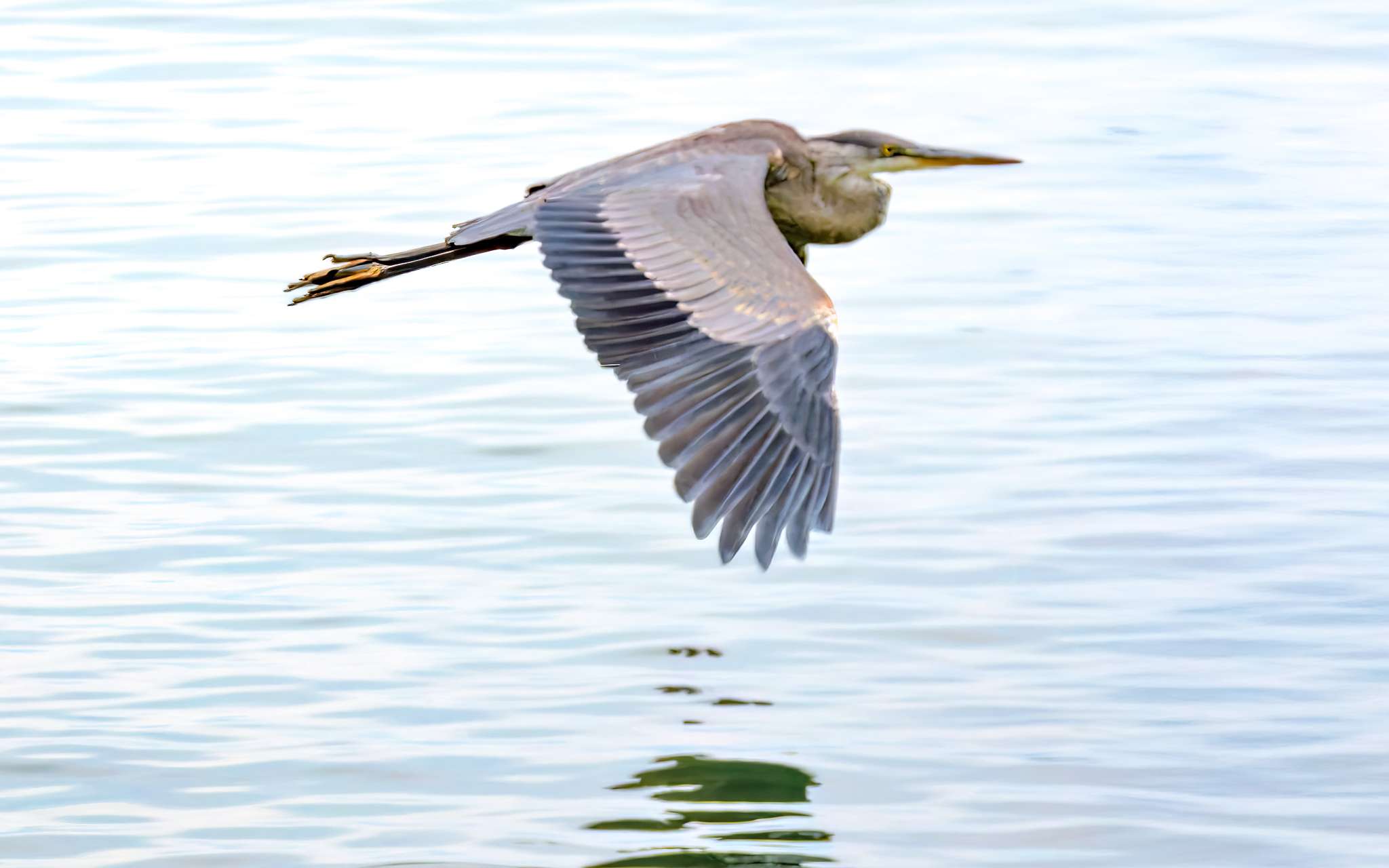
thanks a lot for all this information! and your heron shots especially are fantastics!Also, thanks for the note about noise reduction, that’s actually the main downside I kept seeing mentioned about this camera during my research, so it’s really helpful to know there’s a good solution for it :)

1 Like

thanks for the advice !

This is my first time posting on the forum and I just wanted to say its very heartwarming to receive all your replies, pieces of advice, shared experiences, and sample photos ! Thank you all it really helps :)

and if anyone else comes across this thread and wants to share their own recommendations, or photos taken with the setups mentioned (or other setups that fit my criteria/needs), it’s very welcome!

1 Like

Thanks! As for macro with a bridge cam, one of the trickiest things when trying to get sharpness is working around their aperture limits, which rarely exceeds f8. Limited higher aperture range and the resulting very narrow depth of field, is one of those really tough realities to get around without moving to focus stacking. But that brings in another limitation: moving subjects.

One way I’ve found to make stacking a little easier (and quicker) with a bridge camera is instead of a series of stills, shoot a short ‘focus scan’ in 4k video. You essentially get 24 or 30 frames per sec with this method and usually a 10 or 15 second clip will give you more than enough decent frames to choose from for a decent stack.

If you’re new to stacking I strongly suggest trying out Affinity Photo’s stacking option. It runs circles around Photoshop at aligning and processing the stack and it’s so easy to use.

Here’s an example of that method shot with… are you ready for it? My phone. Nothing too special about my Samsung Galaxy, but add a little clip-on microscope, shoot about 15s 4k video, and run extracted choice frames from that through stacking software, and there you have it. And this next one?

Shot with my Nikon P950 with a Raynox 250 macro clip-on. Same process, different camera.

2 Likes

Wow, those are sharp! These modern phones are getting sharper sharper (of course in this case I think it was a bit more skill involved :wink:).

Yep. Small sensor noise and limited low light performance are indeed the most commonly cited limitation for bridge cams. Shooting RAW and getting PureRaw fixes most of that. As good as a camera costing twice as much or more? (I got my 950 for 350 used with a cracked front lens and fixed it myself for 50 bucks!). Mmm… nope. OTOH, it’s solution I worked out and one I could afford. (Necessity being such a great motivator for innovation).

In the end, compared to the huge, heavy, and expensive ‘pro’ choices to reach the same zoom levels, I can see why a lot of people are heading to the bridges, and some even switch down to get there.

Relatively small and lightweight, the ultra zoom bridge cams mean for many, the difference between turning back home after an exhausting hour of trudging, or spending another hour looking for fresh possibilities and going home refreshed by the experience.