Any Suggestions for a New Camera?

Hi everyone! I’ve had my camera for a little over a year now, and it is already 13 years old! It’s served me so well over the time I’ve had it, and as a naturalist, I can say I definitely used it a LOT. A few months ago, the On/Off switch broke off after having been handled too many times. I lost it among the leaves, and even though I searched in the fading light of a winter evening, I could not find it. So now, whenever I use it, I have to insert the battery to turn it on for photos, and take it back out again when I’m done. This has really damaged my camera, leading me to leave it on longer, wasting more battery, etc. It barely seems to be able to work, and I don’t think it will for much longer.
So that brings me to my question: what are your recommendations for a good camera?
I would like one with a removable lens; I want a telaphoto lens (for birds, and which I will want first, because I now that I started bird photography, I can’t live without it) and a macro lens (for which I can be patient for, since my current camera has a poor macro setting anyway). And obviously a regular lens.
I want relatively good photo quality, but my budget is around $2,000.
If you would, please share about your camera and some of the photos it takes to help me decide!

Thanks for your help everyone!

1 Like

Which camera have you been using?

How much do size and weight matter?

Do you process RAW photos, or shoot in JPEG only?

2 Likes

Anything recent Micro 4/3 or APS-C.

  • OM-5 + 100–400 mm f4–6.3
  • G9 + 35–100 mm or 45–150 mm
  • X‑S20 + XF 55–200 mm or 70–300 mm
  • A6700 + 70–350 mm G
  • EOS R7 + RFS tele
2 Likes

I use two cameras, both of which are quite popular on here. Instead of interchangeable lenses, I just switch cameras, which I can do much faster!

For macro and underwater photos, I use an OM TG-7. It’s tiny, so I carry it nearly everywhere. It takes fantastic macro shots, especially in the stacked-focus mode. The major caveat is that there’s no manual focus mode. It’s also one of the few cameras with built-in GPS.

For distant subjects I use a Nikon P1100. It’s got a 3000mm equivalent zoom lens with stabilization. I can shoot handheld photos of the moon from a rocking sailboat and make out details on the lunar surface. Obviously it’s much bulkier than the TG-7, so I don’t carry it around all the time. It’s great for birds, butterflies and flowers I can’t reach, but the minimum focus distance is about 3 or 4 meters.

I share some of my better observations on flickr, which you can see in this album for an idea of what they can do.

5 Likes

With that budget and those qualifications I’d recommend a Canon R10 with the Canon RF 100-400mm lens. The crop sensor will give you 640mm equivalent focal range, and that particular lens is also very good at macro. The fast AF and eye detect in that camera will also serve you well for bird photography. If you wanted to save yourself some money you could go with a used 7D Mark 2 and a used Canon EF 400mm f/5.6L USM, which according to some, has the same sharpness as a $10k lens but for 1/10th the price and less weight. Whether you end up going with Nikon, Sony, Canon or MFT it doesn’t matter that much, you’ll enjoy whatever you get.

3 Likes

Im a Nikon user, and definitely recommend them as they have a bunch of great options for wildlife lenses. I use a Nikon z6ii with a Nikon 28-400mm lens, its great, but I would go for a Z8 or something with a larger megapixel count so you can retain higher quality images if you don’t have a giant telephoto lens.

2 Likes

There are a lot of existing threads about choosing cameras for iNatting/nature photography on the forum that could be helpful to read.

1 Like

I currently have a Panasonic Lumix, and only cost and quality matter. I’m not sure how to answer the last question.

I have read through them, but found my autistic brain getting confused by the different needs and ideas tossed around. I just decided to start a topic stating my specific needs.

3 Likes

(Heads-up, you can select text you want to reply to, then click “Quote” to include it in a reply. You can then reply to multiple posts in one post of your own).

I guess my question is, do you do much post processing of your photos on a computer, like cropping, adjusting exposure, etc? Like with Lightroom or a similar program?

2 Likes

No, I crop some photos on my camera, but generally just upload unedited pictures.

1 Like

Just a note that I use a TG-7 and mine has a manual focus option. (I think my previous TG model also had MF but it was clunkier to use.) In the TG-7, once you’ve switched to manual focus, you focus by clicking or pressing up or down on the lower wheel on the back (the one with “OK” in the center). You can also go to “MF Assist” in the menu and turn on “Magnify” to enlarge the preview image and “Peaking” to see highlighting on the object that’s in focus.

2 Likes

Buying an Olympus TG-7, my first real camera, and have some questions specific to iNatting

2 Likes

You know (of course you do!) that macro and bird photography are two opposite ends of the spectrum, so whatever you do, to do it well you’re going to need at least two lenses. So my off the cuff recommendation would be go micro four thirds (MFT) and take a look at the OM5 MKII with M.Zuiko 100-400 mm f4-6.3 for birds and Olympus 60 mm f2.8 for macro. New that’s going to cost you a bit more than your budget, unless you’re very lucky with offers, but I would strongly recommend you look at the secondhand market, there are some amazing deals out there. I’ve recently switched to OM System (from Canon) and I bought everything secondhand from MPB. They come highly recommended in the photography community and have never let me down (so far!). One of the big advantages of this setup is its really small size and light weight (well, the 100-400 does weigh a bit, but nothing like its crop sensor or full frame equivalents), but the quality is also exceptional (in my view). As for a “regular” lens, there are so many possibilities out there, I wouldn’t know what to recommend, but once again, trawling through MPB or even Amazon’s secondhand section and you can find some amazing bargains, once you have an idea of what you’re looking at. I hate making this sort of choice, so I don’t envy you… good luck and, whatever you decide, have fun :slightly_smiling_face: .

2 Likes

my recommendation is the same, but I would like to add, if P1100 is too bulky P950 can work almost just as fine, the difference in zoom isnt too great I think

1 Like

This probably isn’t going to sound helpful, but basically any of the current brands of M4/3 and APS-C cameras should have a combination of body + lens(es) that would meet the specifications you list. The main differences are in the details (user interface, special features, pricing/availability).

Depending on how you define “macro” (what amount of detail/magnification you need, whether macro means stacking, etc.), there are some telephoto lenses that have good close-up capacity, so you may be able to avoid switching lenses. There may be a tradeoff in terms of weight. Depending on what sort of subjects you want to use the macro for, you might also be able to use a clip-on lens on the telephoto lens for close-ups (I haven’t found this viable for small flighty subjects like bees).

2 Likes

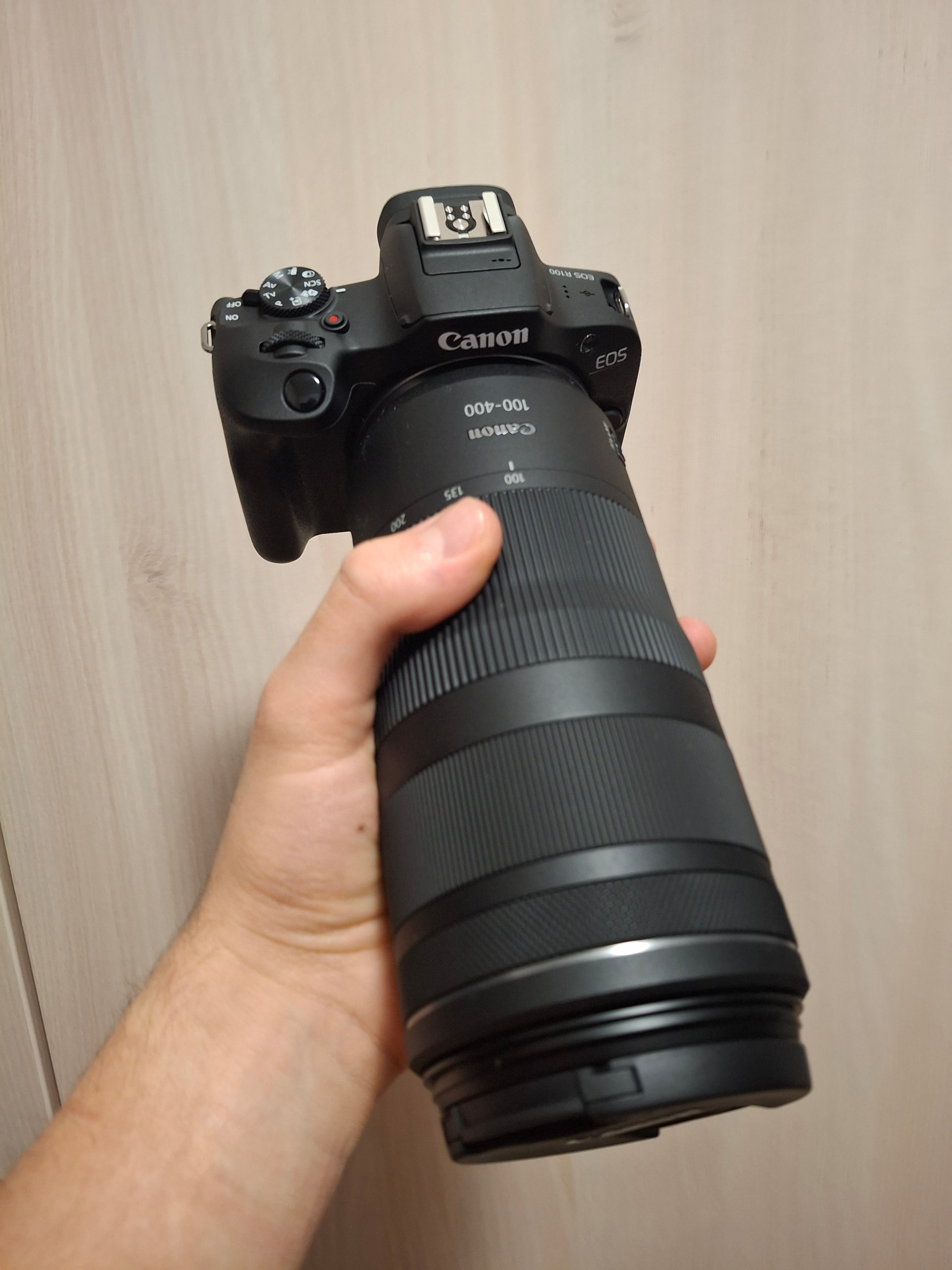
I strongly recommend the Canon EOS R100 (R50 is better, but a little more pricey) together with a Canon RF 100-400mm F5.6-8 IS USM telephoto lens.

It’s pretty light for a telephoto lens, it weights about 2 pounds or so…


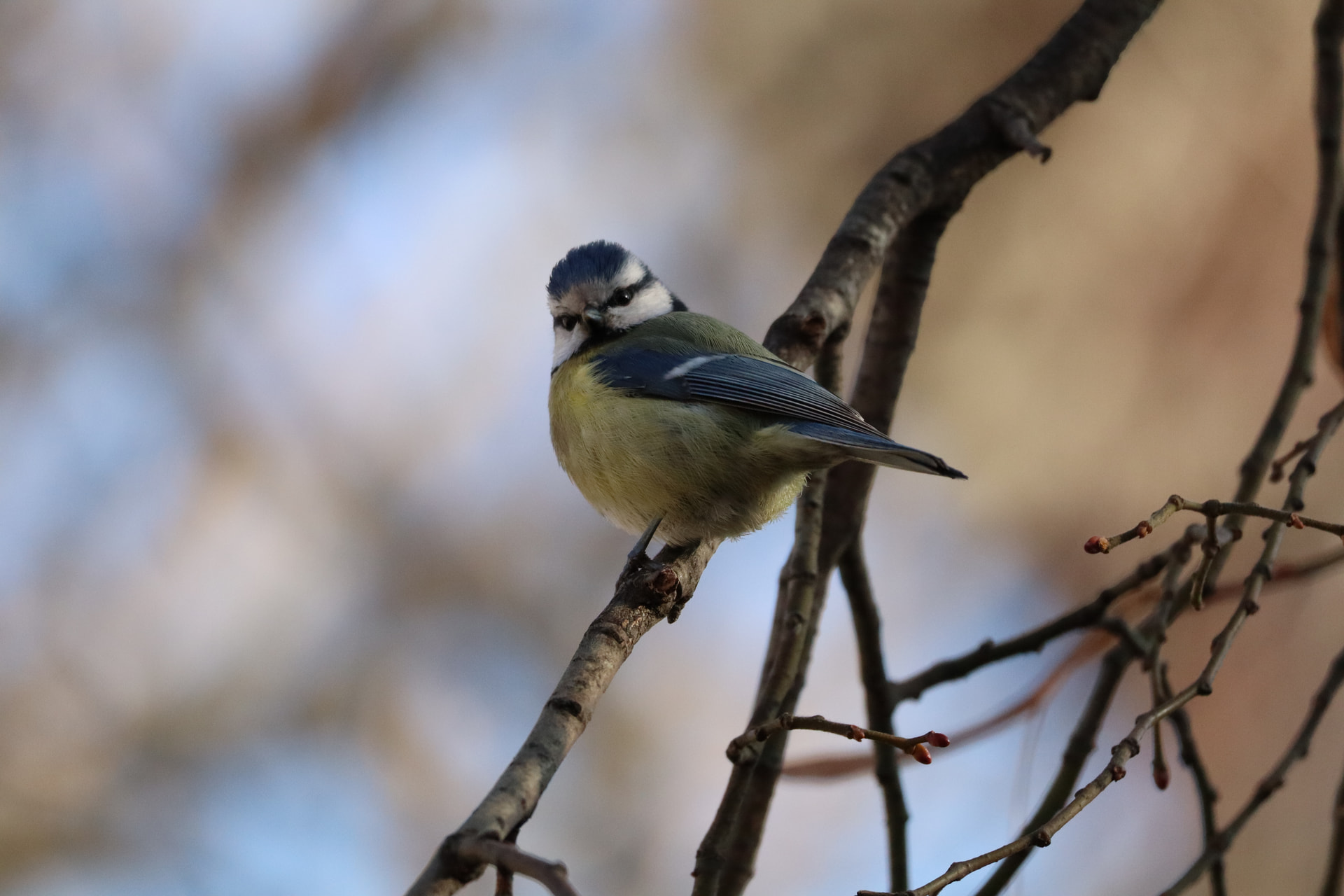
Here are my top 5 photos of the year, together with these ones:

As for the last year, one of the first photos I took is a favorite, for sure:

I am so happy with it, it only gets better with every shot you take! As you begin to master it, the results are awesome!

It’s one of the cheapest options I could find out there (like @mkanimallover you said, it’s under 2000 $) I don’t know what are the options in the US, though.

Anyways, it’s a handy camera that I enjoy using, and I think anyone would!

4 Likes

With a good camera, the photos still won’t look very good without proper technique. When I started, I bought a used Nikon D3100 that came with a couple of lenses for about $200. The camera is, of course, very old—it was released 16 years ago, and the one I bought had been sitting in a camera bag for years. Even though I would prefer something newer, it gets the job done well enough, so I haven’t really felt the need to upgrade as long as it isn’t broken.

One of the lenses it came with, the Nikon 55–200mm, was available for about $150–$200. This is obviously very cheap, and the lens is by no means even decent. But since that was all I had, I read and watched a bunch of photography articles and videos, and I went out shooting as often as I could. If I stayed close enough to the subject (usually 4–5 feet away) and adjusted the settings properly, I was able to get results like this—not perfect, but much better than expected considering the gear:

Remember that with most lenses, certain apertures (e.g., f/2.8, f/4, etc.) aren’t sharp when used wide open. Usually, you’ll want to stop down a bit. For my lens, wide open at 200mm was f/5.6, so to get much sharper results I would use f/8. This means less light, but the sharpness improvement was worth it.

When it comes to macro photography, I would recommend the lenses made by Laowa. Keep in mind that if you’re using Olympus or Panasonic, the sensor has a 2× crop factor. So, for example, the Laowa 25mm—the lens I use—has a maximum of 5× magnification. My camera has a 1.5× crop factor (Canon has 1.6×), but Olympus would effectively give you 10× magnification. This sounds great, but due to the smaller sensor, less light is available, which causes grainier photos than an APS‑C sensor would produce.

Also, if you’re using the Laowa 25mm, aperture matters a lot. At 2.5×–3.5× magnification, f/4 is the sharpest point. But at 4×–5× (with 4.5× being the sharpest between those), shooting wide open at f/2.8 gives the best results. And as always, with a lens like that, I highly recommend using a flash and a diffuser to get good lighting. You can buy diffusers from AK or Cygnustech, which are excellent, but personally I’m too cheap and made my own out of paper and clips.

8 Likes

I search on Internet for a good telephoto setup and Sony a6700 as body camera and the
70-350mm lens from Sony looks good. If you want to get a better idea of the quality of this i found a way to do it: go to your browser and just type: Flickr. It’s a photography website, and I find it useful for viewing photography equipment. Now, tap the search button and then type the camera body and lens into the search bar. In this case, it would be:
Sony a6700 and 70-350mm G OSS. The biggest problem is that it requires you to create an account, it doesn’t ask for money, but to access it without problems you need to create a free account, just by entering an email address.

Now this was only in case you just want to use a full telephoto setup because the total cost is around 2000 USD.

if you’re completely decided on getting a new camera body and three lenses, here are my recommendations based on my research:

  1. Camera: Sony a6400 costs. Around 700$ USD

  2. Macro Lens: Laowa 100mm f/2.8 2x for Sony E. Around 450$ USD
    It magnifies at double (2:1) what standard macro lenses do (1:1). It’s manual and takes some practice, but has a great detail for tiny things.

  3. Telephoto Lens: Sony 70-350mm G OSS. Around 1000$ USD
    Because of the crop factor, this lens behaves like a 105-525mm. Very good for birds. And i think it can be used as a semi macro too, to take photos for bigger insects at a short distance.

  4. Regular Lens: 7artisans 18mm for Sony E mount. Around 80$ USD.
    It’s a wide-angle lens that’s more useful for landscapes than anything else.

This setup will probably cost over $2000 USD, but if you look carefully and find discounts, it might end up at the exact price of $2000 USD.

My last advice is: it’s often difficult to know what you want, so it’s best to explore it yourself. I’m inexperienced with cameras and lenses, and since i don’t really know anyone who can help me with this, I tend to take risks and try out whatever equipment is within my budget. I don’t have much money, but sometimes you don’t need to spend a lot of money to take great photos; it’s just about practice and enjoying the process.

2 Likes

It is an otherwise excellent, lightweight tele, but it has a minimum focus distance of over a meter. I find it extremely frustrating to try to take close-up photos with it and I would not consider it suitable as a semi-macro.

I haven’t used it, but the new Tamron 50-300mm offers a much better close focus with a similar size/weight and gets up to 1:2 magnification.

The Laowa macro lenses are fantastic if you are OK with a completely manual lens, and it is available for most camera mounts, so this is a good option regardless of what brand you are looking at.

If “macro” for you includes stacking, this is going to be somewhat simpler with an autofocus lens, and other brands will offer more sophisticated in-camera technical options for stacking than Sony.

As I noted above, just about any modern interchangeable lens camera you purchase will allow you to take good photos. The most important differences are going to be in handling and preferences here tend to be very individual, so if you have an opportunity to visit a camera store and try out some of the models you are considering, I highly recommend doing so.

4 Likes