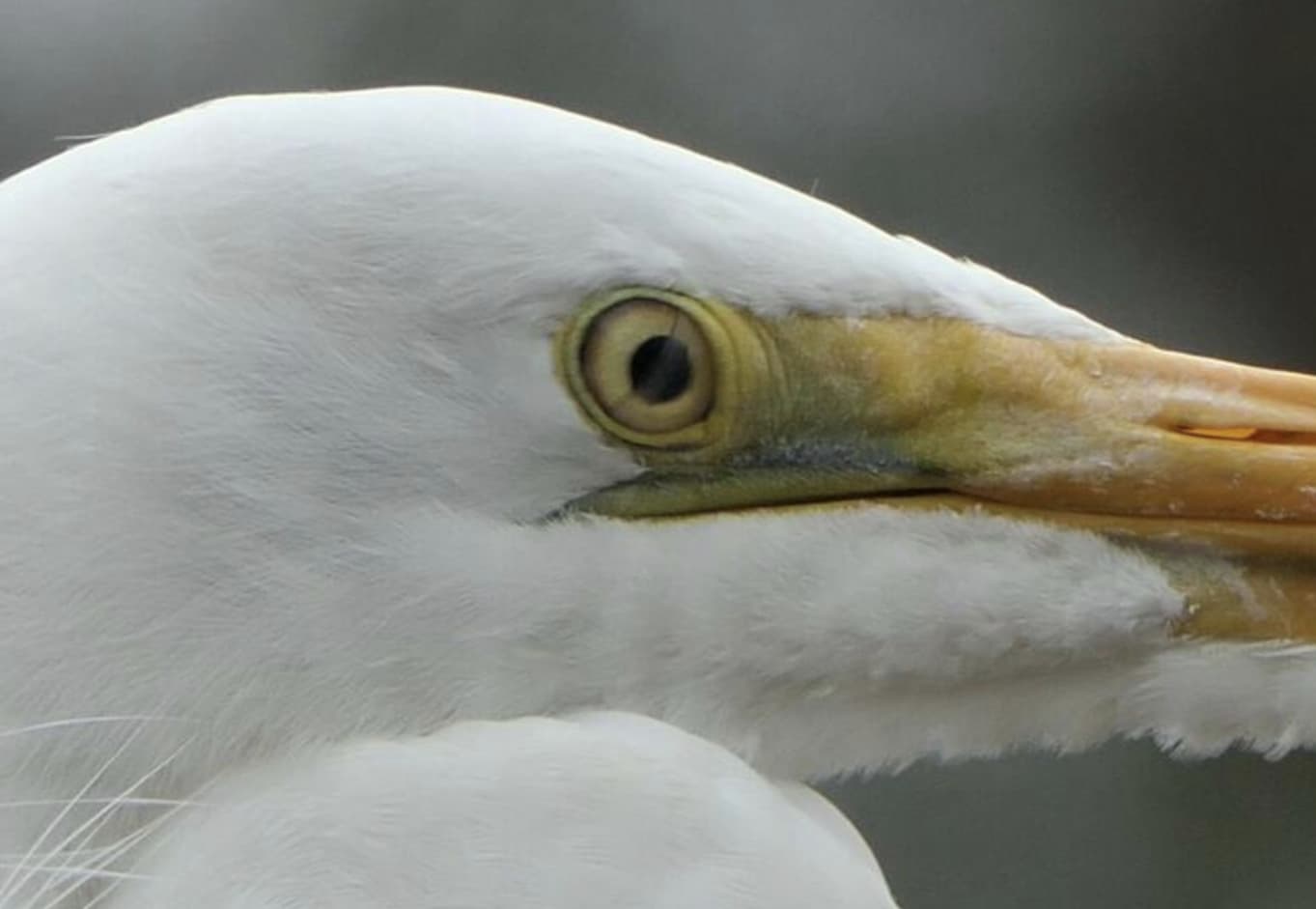
A nictitating membrane is a third eyelid present in some animals (but not humans).
@pisum spotted this egret blinking with the nictitating membrane https://www.inaturalist.org/observations/262879011 (video linked in observation)
A nictitating membrane is a third eyelid present in some animals (but not humans).
@pisum spotted this egret blinking with the nictitating membrane https://www.inaturalist.org/observations/262879011 (video linked in observation)
This one should totally be on there!
Don’t humans have a remnant of it on the inside corner of their eyes? (I’m not a human so I don’t know.)
Connate: Joined or united with a structure of the same kind, as sepals or petals. [American Heritage English Dictionary app]
Connate petals are commonly seen in Ipomoea (morning-glory), Vaccinium (blueberry), Arctostaphylos (manzanita), and Solanum (nightshade). These are just four genera that come readily to mind - I’m sure you all can name others! The resulting flower can be tubular (or near-tubular) or, in the case of Solanum, more like a disc.
Here are two examples of flowers with connate petals:
Ipomoea seaania:
Petunia also has connate petals. I sometimes confuse Petunia with Ipomoea when identifying, so I put Solanales, which covers both.
You beat me to that one!
It was the first word I found before any other words!
A pangram!
In zoology it refers to being glassy or transparent.
Also the namesake of the hyaloid canal, which separates the vitreous membrane of the eye in most mammals.
It’s been mentioned by a few folks, but here’s a screenshot of CORM being soullessly rejected by Spelling Bee:
According to Wikipedia, it’s
a short, vertical, swollen, underground plant stem that serves as a storage organ that some plants use to survive winter or other adverse conditions such as summer drought and heat
Growing up in Hawaii, we learned that it’s the corms of taro (kalo in Hawaiian) that are used to make poi, a staple food.
I was going to post that if someone else didn’t!
Ah, that reminds me, I keep meaning to post this one:
Not really a term but a type of fish. I tried to see a “grunion run”, when many adults swim onto the sand to spawn, but just saw arthropods.
An achene is a kind of fruit that is dry, contains one seed, and does not open at maturity.
https://www.inaturalist.org/observations/188305897 from @gcwarbler
A gyne is a member of the primary reproductive female caste of social insects.
edit: also adding ALATE, which is the winged form of ants and termites (and is sometimes used for other insects).
an alate gyne: https://www.inaturalist.org/observations/170081532 from peter_yeeles
Neoteny is the retention of juvenile characteristics in adult animals, for example, gills in adult salamanders.
https://www.inaturalist.org/observations/55119134 from Bryan Maltais
This topic was automatically closed 60 days after the last reply. New replies are no longer allowed.
Mudpuddle (also written “mud-puddle”, “mud puddle”, or just “puddle”) is when butterflies gather on wet soils to get nutrients like salt and amino acids.
https://www.inaturalist.org/observations/205655139
The past tense of pup, meaning to give birth to pups. Here’s a flying fox that has recently pupped.
https://www.inaturalist.org/observations/187049568
Yes, I was frustrated by pupped not being there as well!
Edaphic means relating to soil (as opposed to e.g. climatic) conditions, so things like pH, nutrient availability, drainage, etc.
Here is a goldenrod from kerrywoods, who thinks edaphic conditions caused it to be dwarfed:
https://www.inaturalist.org/observations/266681021
Double sigh for this one since it would have been a perfect pangram.