He looks so unimpressed by our photoshoot. I’ve noticed a big uptick in these anoles in my yard lately. I really love finding any species endemic to Hispaniola. With only 42 observations I know it’s something special.
Nice. I have that 25mm also, just a clunky way to get enough light for it. I just picked up an AK diffuser in the past week, so I will have to try this new pairing.
I feel most people would say its a pretty horrible lens to use. But when it works, it works nicely. But I would say it is not optimal in most conditions. The cygnustech comes with a light which wraps around the base of the flash to provide guidance lighting (But you could probably do something similar with yours if it doesnt have that by default the bit at 6:08 of this https://www.youtube.com/watch?v=EjsscwMv2io), but I will still also generally have a second light (Like a headlight) proped to shine light back from another angle.
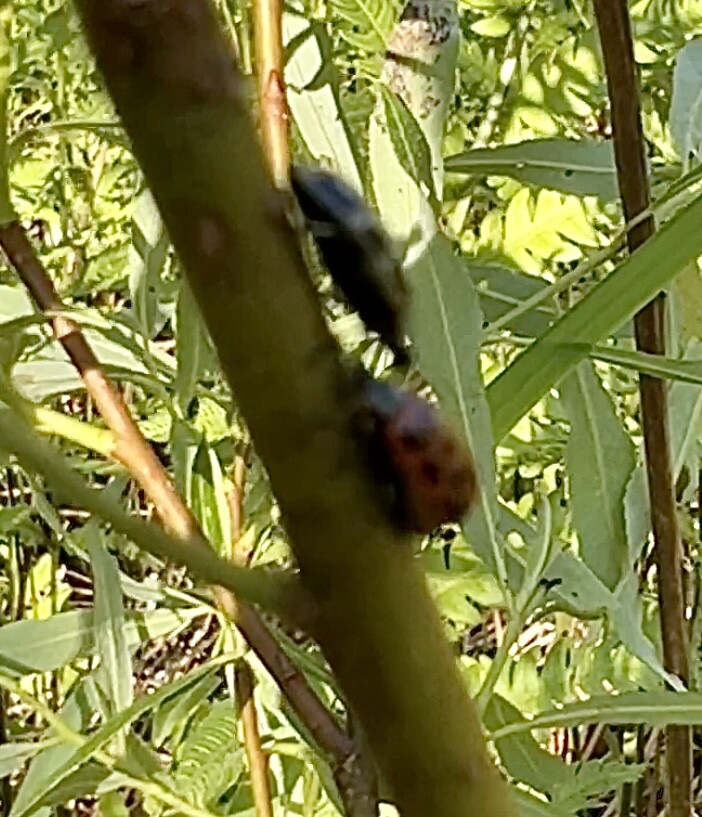
I don’t remember the specific details, but i remember reading how the Asian lady beetle is an unaffected host to a bacterial fatal to other lady beetles.
It’s the kind of evolutionary ‘success’ story that is pretty common with invasive species.
Haha zero drops of irish blood flowing in my veins. I realize that was a stupid phrase, I meant to say “compared to the average size of a full grown Burmese python, this one is still small, even though it is already large.”
Not a true “lifer” in the sense of the first time I’ve ever seen it, but a Lifer in the sense that it’s the first time I’ve seen it since joining iNat:
Pink Lady’s-slipper Cypripedium acaule.
In fact, it’s the first time I’ve seen one in decades. It was near and dear to my heart as a child growing up in New England, and at the time it seemed rather uncommon, so I am glad to see that it is a species of Least Concern. (In fact, over on another topic someone was questioning whether we should really be posting all those many C. acaule that are being observed!)
It also reminds me fondly of my long-ago high school biology teacher, who sparked my enduring interest in wildflowers, and gave me my first field guide, the Peterson guide (1960s edition) which has C. acaule and two other lady’s-slippers on the cover, and which is a treasured possession.
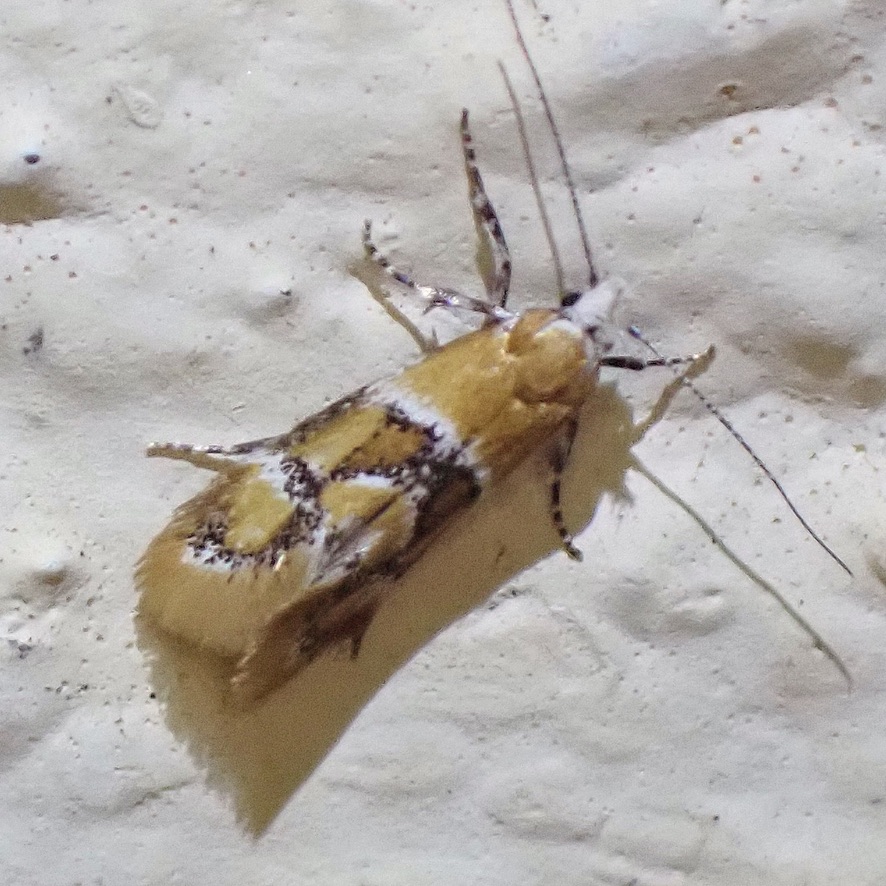
Two days ago I was a bit disappointed that I didn’t find any big moths, so I had to take photos of the little ones. I didn’t see much with my eyes but the camera did a good job. It turned out to be two lifers!
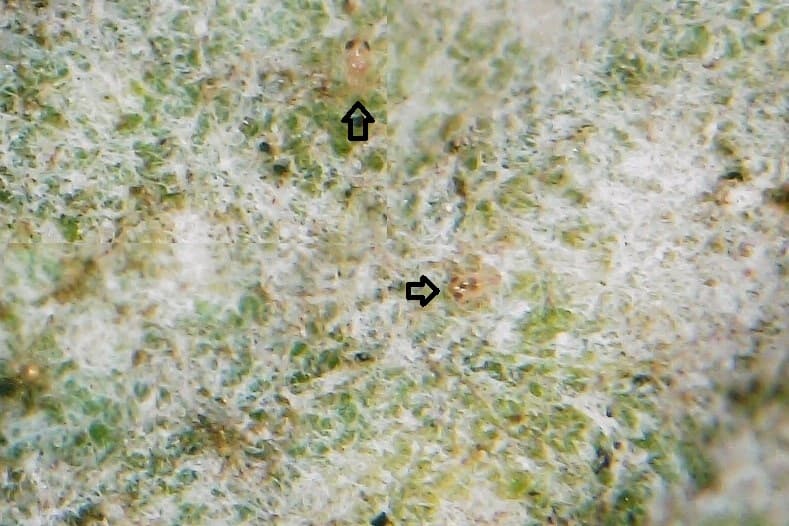
This week I observed a heavy infestation of powdery mildew on wild vervain. My search for the identity led to records of two possibilities: Golovinomyces ambrosiae and Podosphaera xanthii (previously known as Sphaerotheca fuliginea), both of which, interestingly, are best known as diseases of Cucurbits. Since these are in different tribes, I can’t go any better than family. Hence, they are not my favorite. But when I put them under the scope, this is what I saw:
The black arrows point to mites crawling among the fungal hyphae. Ten pages of Google Scholar results and the only reference to mites possibly feeding on powdery mildew was Zemek and Prenerova (1997), which describes Typhlodromus pyri using powdery mildew as an alternate food source. If any acarologists know differently, I would love to learn about it, but until then, that’s the genus I’m going with.
A lifer means the first individual you’ve seen of a particular species. Or in the context of iNat, the first individual you’ve documented (photo or audio) of a particular species.